Shaping Selfhood: How Tech and Social Media Influence Teens’ Identity Formation

Emanuela Koch


Adolescence is a time of profound self-discovery: teens experiment with interests, values, friendships, and personal style as they build their emerging identities. Yet in today’s hyperconnected world, much of that identity work happens on screens.


Rather than exploring who they are through face-to-face interaction, teens now look to social-media feeds, influencers, and online communities to test different selves. Every “like”, filter, and “follow” becomes a data point that algorithms use to mirror back a curated version of the self. This digital reflection can empower creativity and connection, but it can also distort self-worth, foster comparison, and lock teens into narrow, algorithm-driven identities.


In fact, a 2024 Mozilla study (1) found TikTok locks in on a user’s niche within 40 minutes, after which 80% of videos reinforce that same theme, even if the user stops engaging. Over time, teens learn to judge their worth by these algorithmic reflections, embedding a fragile, externally dictated self-image.


Why Teenage Years Are Crucial for Identity Formation


During adolescence, the brain undergoes a dramatic reorganization. The limbic system, which governs emotions and reward processing, matures rapidly around puberty, making teens especially sensitive to social feedback and novelty. In contrast, the prefrontal cortex, responsible for impulse control, planning, and reflection, continues developing into the mid-twenties. This imbalance creates a window where emotional drives often outweigh rational oversight.


Simultaneously, the brain undergoes synaptic pruning and myelination, strengthening neural pathways through repeated behaviors. Online, every click, like, or share provides immediate emotional payoff and simultaneously reinforces circuits that link identity to digital validation loops. This makes adolescence a uniquely malleable, and vulnerable, time for forming a lifelong sense of self.


A World Where Identity Is Always “On” and the Pressure of Perfection


A January 2025 CNA–Institute of Policy Studies survey (2) found Singaporean teens spend an average of 8.5 hours per day on screens, more time than they devote to school or sleep. Globally, 46% of U.S. adolescents report being online “almost constantly,” and 60% feel pressured to present an idealized self for likes and followers (3). In this nonstop digital stage, every scroll, post, and reaction wires directly into the neurons shaping a teen’s self-concept.


Physical appearance is central to many teens’ identities, and social feeds are flooded with airbrushed ideals. Internal Meta research (4) leaked in 2021 revealed 32% of teen girls said Instagram made them feel worse about their bodies. Add to that nighttime scrolling, KK Women’s & Children’s Hospital (2024) (5) found each extra hour of screen use after 10 p.m. raises next-day mood-swing odds by 21%. A sleep-deprived brain struggles with memory consolidation and self-reflection, processes vital for a coherent self-image, rendering teens more vulnerable to comparison and self-critique.


Algorithms can also amplify harmful behaviors as identity expressions. In the Center for Countering Digital Hate’s Deadly by Design (2022) report (6), new teen TikTok accounts encountered self-harm content within 2.6 minutes, and after 30 minutes, one in three videos promoted self-injury or suicide​. Likewise, a December 2024 CCDH study (7) of YouTube recommendations found one-third of suggested videos contained harmful eating-disorder content, and 81% were not age-restricted. These loops trap vulnerable teens in a damage-defined identity, where pain and deprivation become badges of belonging.


Community and Exploration


It’s not all negative. Digital spaces can offer critical support for identity exploration, particularly for teens who feel marginalized offline. Online communities around neurodiversity, LGBTQIA+ experiences, or niche interests allow adolescents to test labels, find peers, and receive affirmation they might lack in real life. For example, transition narratives on TikTok help gender-questioning youth learn terminology, access resources, and spot role models. When stories of gender euphoria, the joy and comfort of affirmed identity, are shared online, some teens gain the language and confidence to live authentically. The key is ensuring these affirming narratives support rather than prescribe any one pathway.


Autonomy Under Threat


A stable identity requires privacy and agency over one’s own story. Yet Europol’s EU-SOCTA 2025 report (8) highlights a 1,400% surge in AI-generated nude images of minors as deepfake tools proliferate. In response, schools in Europe and North America now run “deepfake drills” to teach students how to spot synthetic abuse and report incidents. Simultaneously, every tap and like is harvested as data capital: TikTok was fined €345 million in 2023 (9) for mishandling under-16 data, and by age 13, the average U.S. teen accumulates 72 million data points that shape ads, credit offers, and even college recruitment. These incursions can leave teens feeling exposed, monitored, and reduced to a data profile, undermining self-determination.


Building Resilient Identities


Parents can’t, and shouldn’t, unplug technology. Instead, we can transform digital pressures into opportunities for intentional identity work using the these tips:


  1. Presence: Weekly 5-minute Tech Tours where teens guide parents through their favorite apps, validating interests and spotting harmful patterns together.
  2. Educate: Explain algospeak and data harvesting, teaching teens they’re authors of their digital profiles, not products of them.
  3. Agreements: Co-create a Family Tech Charter with mutually agreed limits (e.g., bedtime Downtime, screen-free zones) to bolster self-regulation.
  4. Role-model: Demonstrate healthy detachment, charge devices outside bedrooms and share your own Screen Time stats openly.
  5. Support and Boundaries: Bookmark crisis lines (SOS: +65 7672 4357; IMH helpline: 6389 2222) and enable in-app filters to safeguard mental health.
  6. Alternatives: Encourage one daily offline “dopamine” activities (like sports, music, volunteering) to anchor identity beyond screens.


The Takeaway: Authentic Selfhood in a Digital Age


Technology can accelerate identity exploration and foster creative communities, but without guidance, it can also narrow, distort, and commodify self-concept. By weaving together clinical insight, data-driven understanding, and collaborative strategies, parents can guide teens toward authentic, resilient identities, both online and off.


References


1 Mozilla Foundation. “TikTok: Unpacking Algorithmic Personalization.” Mozilla Research, April 2024.
https://foundation.mozilla.org/en/research/tiktok-algorithmic-personalization-study/

2 CNA & Institute of Policy Studies. “Singapore teenagers spend nearly 8.5 hours per day on screens.” Channel News Asia, January 2025.
https://www.channelnewsasia.com/singapore/screen-time-devices-survey-teens-spend-daily-stress-490828

3 Pew Research Center. “Teens, Social Media & Technology 2023.” Pew Research Center, October 2023.
https://www.pewresearch.org/internet/2023/10/25/teens-social-media-technology-2023/

4 The Wall Street Journal. “Facebook Knows Instagram Is Toxic for Teen Girls, Company Documents Show.” September 2021.
https://www.wsj.com/articles/facebook-knows-instagram-is-toxic-for-teen-girls-company-documents-show-11631620739

5 KK Women’s & Children’s Hospital. “Screen Use and Sleep Patterns in Adolescents.” Journal of Pediatric Sleep, March 2024.
https://www.kkh.com.sg/health-information/child-screen-time-sleep-study

6 Center for Countering Digital Hate (CCDH). Deadly by Design. December 2022.
https://counterhate.com/wp-content/uploads/2022/12/CCDH-Deadly-by-Design_120922.pdf

7 Center for Countering Digital Hate (CCDH). YouTube’s Anorexia Algorithm: Key Findings. November 2024.
https://counterhate.com/wp-content/uploads/2024/12/CCDH.YoutubeED.Nov24.Report_FINAL.pdf

8 Europol. European Serious and Organised Crime Threat Assessment (EU-SOCTA) 2025. March 2025.
https://www.europol.europa.eu/activities-services/main-reports/eu-socta-2025

9 Irish Data Protection Commission. “TikTok Fined €345 Million for Breaching GDPR.” DPC News, September 2023. 

https://www.dataprotection.ie/en/news-media/tiktok-gdpr-345m-fine


By Esther Oon-Bybjerg June 17, 2026
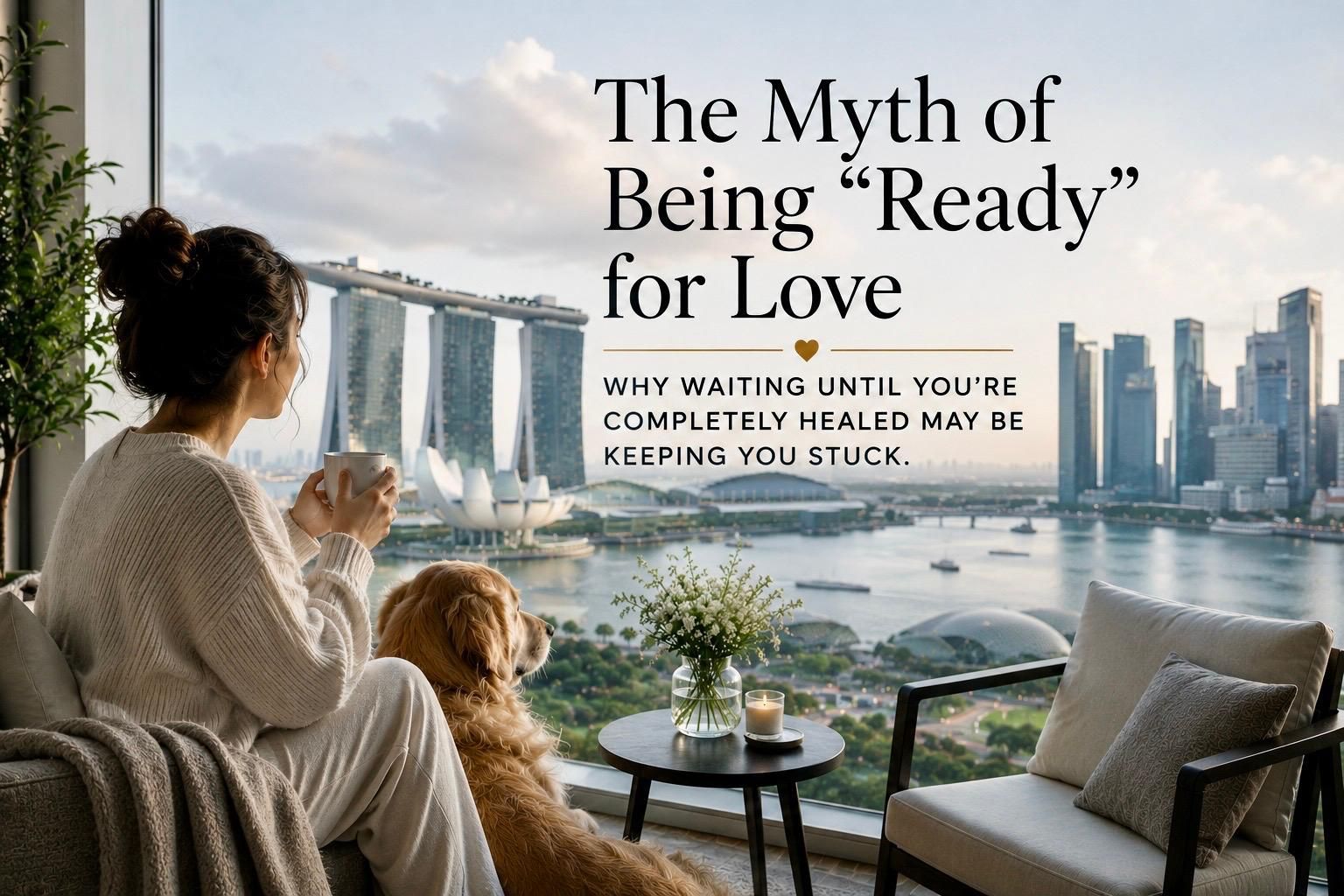
Six months after her breakup, my client Janice (not her real name) told me she wasn't ready to date. At first, that didn't strike me as unusual. Breakups take time to recover from, and there is often wisdom and maturity in creating space to reflect before rushing into something new. But as we spoke, it became clear that Janice wasn't simply taking time to heal. She was waiting to become a different person. Since the breakup, she had immersed herself in self-development. She signed up for new sports, took on more responsibilities at work, read books on attachment theory, and spent countless hours trying to make sense of what the relationship had taught her. What began as a healthy desire to learn from the experience had gradually turned into a project with no clear endpoint. "I still have work to do," she explained. When I asked what would need to happen before she felt ready to date again, she described a version of herself who no longer became anxious if someone pulled away, no longer worried about rejection and no longer carried any emotional scars from past relationships. Listening to her, I found myself wondering whether she was talking about healing at all. What she seemed to be describing was the absence of vulnerability. After a painful breakup, it is easy to conclude that the safest path forward is to focus on ourselves. We tell ourselves that once we become more secure, more self-aware and less reactive, then we will be ready for a relationship. The underlying assumption is that love comes after healing. It is hardly surprising that so many people believe this. We are constantly encouraged to "work on ourselves first" by social media, self-help content and well-meaning friends. Yet the more I thought about Janice's dilemma, the more I questioned whether we have misunderstood how healing actually works. If relationships wound us, can they also heal us? If we gathered some of the most influential psychologists of the last century into one room and asked whether people need to become fully healed before entering a relationship, many of them would challenge the premise of the question itself. Not because healing is not important. Rather, because human beings do not heal in isolation as most imagine. John Bowlby, the founder of Attachment Theory, spent much of his career studying the relationships that shape our emotional lives. Together with Mary Ainsworth's research, his work highlighted how our sense of safety, trust and belonging develops through our interactions with others. This raises an interesting question. If some of our deepest insecurities were formed in relationships, can they be healed in isolation? Insight certainly helps. Understanding why we fear abandonment, struggle with trust or become anxious in intimacy can be valuable. Therapy can help us connect the dots between our past and present. Self-reflection can increase awareness of patterns that previously operated outside our consciousness. Yet there are some lessons that can only be learned through experience. A person who fears abandonment does not simply need insight into where that fear came from. At some point, they need experiences that challenge the fear itself. They need to discover what it feels like when somebody stays, follows through and remains emotionally present. This is what attachment researchers mean when they talk about "earned security." We do not think our way into security. We gradually experience our way into it. The parts of ourselves we only meet in relationships Janice nodded when we discussed this, but she still looked worried. "I understand that intellectually," she said, "but how can I be ready to date if I’m still feeling anxious?" It is a fair question. After all, if old insecurities continue to surface, doesn't that mean more healing is needed? Carl Jung might have offered a different perspective. He believed that relationships have a unique ability to reveal aspects of ourselves that remain hidden when we are alone. Much of what sits outside our awareness only becomes visible when it is activated. Anyone can feel calm and secure when there is nobody close enough to disappoint them. Intimacy has a way of exposing fears, assumptions and vulnerabilities that otherwise remain hidden. This can feel discouraging. Many people enter a new relationship only to discover that old insecurities reappear. They interpret this as evidence that they are not healed after all. The truth is the appearance of fear is not always a sign that healing has failed or one has regressed. Sometimes it is a sign that healing has reached a layer that was previously inaccessible. Healing as a Prerequisite As our conversation continued, Janice arrived at something deeper: "Part of me feels like I must fix myself first." I hear some version of this often in therapy. Not that people believe they are unlovable, but that they must become a much better version of themselves before they are ready for a relationship. Carl Rogers who devoted much of his career to understanding what helps people to grow and flourish, observed that growth thrives in an atmosphere of acceptance rather than constant evaluation. Yet Janice had turned healing into a qualification process. The more she learned about attachment, boundaries and emotional health, the more criteria she seemed to create for herself. The difficulty is that healing has no finish line. If complete healing is the standard for entering a relationship, many of us may spend years preparing for an exam that nobody ever passes. Relationships are one of the places where healing happens What strikes me is how many modern approaches arrive at similar conclusions despite speaking very different languages. Daniel Siegel's work in interpersonal neurobiology demonstrates how our brains and nervous systems continue to develop through relationships. Jeffrey Young of Schema Therapy suggests that deeply held beliefs such as "I am unlovable" are rarely transformed through insight alone; they often require corrective emotional experiences that challenge old assumptions. Even Acceptance and Commitment Therapy, which focuses heavily on psychological flexibility, would likely question the idea that we should wait until fear disappears before living our lives. One of its central messages is that meaningful action often comes before confidence, not after it. Different theories yet they point toward the same possibility: relationships are not simply the reward we receive after healing. They are one of the places where healing happens. Ready enough Near the end of our work together, Janice rewrote the rule she had been living by. Instead of telling herself, "I need to heal before I date," she began experimenting with a different idea: "I can keep healing while I date." On the surface, it sounds like a subtle shift in wording. Yet it reflects a fundamentally different understanding of how growth happens. The myth of being “ready” for love assumes that healing and relationships happen sequentially and that we fix ourselves first and connect later. Yet Bowlby, Rogers, Jung and many others show us that human beings are shaped in relationships, discover themselves in relationships and often heal in relationships too. That involves entering a relationship with enough self-awareness to recognise our patterns, enough responsibility to own them, and enough curiosity to remain open despite the uncertainty that comes with caring deeply about another person. As Donald Winnicott wrote, “It is a joy to be hidden, but disaster not to be found.” The goal is not to hide until all the work is done, but to keep growing while allowing ourselves to be seen. 
By Aki Tsukui - Director of Wellness / Leadership & Systemic Coach June 2, 2026
In today’s performance-driven world, identity is often shaped by what we do, how we deliver, and how we are perceived. We become known for our roles, our output, our ability to keep going.But beneath this constructed identity lies a quieter question: Am I living and leading as a whole human being? This is where the conversation on identity begins to shift from definition to integration. The Hidden Cost of Fragmentation Many individuals move through their professional lives in subtle disconnection. The mind is engaged - analyzing, solving, producing. The body is overridden - pushing through fatigue and tension. Emotions are managed or suppressed. And a deeper sense of purpose is often left out entirely. Over time, this fragmentation accumulates. It begins to show up as fatigue, reduced clarity, emotional depletion, or a gradual sense of disengagement. In more visible forms, it is named as burnout. As this experience becomes widespread, it calls for a different understanding. Burnout is no longer best seen as an individual issue. It is a signal of accumulated strain, and often, of how work systems are designed around disconnection. This is what is opening new conversations in leadership today. A Reframing of the Conversation In a recent workshop. The Workplace Reset, with leaders and HR professionals, a different kind of dialogue began to emerge. Instead of asking, “How do we fix burnout?”, the question deepened: What are we asking of people and from which parts of themselves are they operating? There was a clear shift. Burnout began to be seen as organizational feedback, not personal failure. Wellbeing moved from a benefit to a foundation for performance. And resilience was reframed: not as silent endurance, but as the ability to stay connected while navigating challenges. At the heart of these reflections was a simple realization: People do not show up to work in parts. They show up as whole human beings. The Four Dimensions of Being To understand identity more fully, we must recognize the dimensions that shape our experience: • Mind — thoughts, logic, and sense-making • Body — physical state and lived experience • Emotion — inner and relational world • Spirit — values, purpose, and alignment When these operate in isolation, we may still function but often at a cost. Clarity becomes forced. Energy becomes depleted. Decisions feel misaligned. But when these dimensions integrate, something shifts. There is steadiness. Clarity becomes more natural. And a sense of coherence emerges in how we think, feel, and act. This is not about adding more. It is about reconnecting what has been separated. Identity as a Felt Experience Identity is often approached as something we define intellectually through titles or strengths. But true identity is not something we arrive at through thinking alone. It is something we experience . It is felt when actions align with values. When the body is not in resistance to the pace we keep. When emotions are acknowledged rather than suppressed. When work connects to meaning. The body plays a crucial role here. It holds signals the mind may override: tension, fatigue, ease. These are not inconveniences, but information. When we begin to listen, not just cognitively, but somatically, we access a more honest relationship with ourselves. From that place, identity becomes less about performance, and more about alignment. Embodied Leadership This shift toward integration is especially relevant in leadership. Traditional leadership has emphasized control, decisiveness, and cognitive strength. While important, these are no longer sufficient on their own. What is needed is embodied leadership . The capacity to lead from internal coherence. To stay grounded under pressure. To acknowledge emotions without being overwhelmed. To think clearly without disconnecting from intuition. To act in alignment with values, not just expectations. Leaders who operate this way shape environments. Where people feel safe enough to be honest. Where challenges can be named. Where wellbeing supports performance. In such spaces, people are not required to fragment themselves to succeed. They are able to show up more fully and contribute more meaningfully. Integration as Practice Integration is not a one-time insight. It is an ongoing practice. It requires pause withinmovement. Awareness within action. And the willingness to notice when we are out of alignmentand return. This may look like: • Checking in with the body, not just the mind • Noticing emotions without suppressing them • Creating small moments of stillness • Reflecting on whether decisions feel aligned These simple practices begin to shift how we relate to ourselves and our work. Harmony, Not Perfection Integration does not mean being perfectly balanced. Harmony is dynamic. There are moments when the mind leads, and moments when the body needs rest. Times when emotions surface, and times when purpose provides direction. The key is not control, but connection. To remain in relationship with all parts of ourselves and trust the intelligence within that allows us to respond with coherence. This is where resilience takes on a new meaning: Not endurance without struggle, but the ability to stay connected while moving through it. A New Way Forward As organizations navigate increasing complexity, there is an opportunity to redefine what it means to perform and to lead. Not through further optimization of parts but through integration of the whole. Because the most sustainable way of working is not built on pushing harder. It is built on coherence. On creating conditions—within individuals and systems—where people do not have to disconnect in order to function. Where identity is not something we perform, but something we live. And where, in returning to wholeness, we unlock not only wellbeing but a deeper, more grounded form of leadership.
By Ines Palomera June 2, 2026
Every year, Pride Month invites us to celebrate LGBTQ+ identities, communities, histories, and the people who came before us. Yet beyond the colours, visibility, and public celebrations, Pride also invites us into a deeper reflection: what does it mean to belong to ourselves? What does it mean to be seen, not only by the world around us, but by the people we love, the communities we live in, and the systems that shape our everyday lives? From a marriage and family therapy perspective, identity is never formed in isolation. We do not simply wake up one day with a complete understanding of who we are. We become ourselves through relationships. We are shaped by our families, cultures, religions, languages, gender expectations, friendships, migration stories, and the places we learn to call home. For many of us, identity is not one single answer, but rather a collection of many parts of ourselves trying to coexist. This is especially true in a city like Singapore. Singapore is a place where so many cultures, religions, languages, and ways of being exist side by side. There is something deeply precious about walking through a city where people express themselves through food, dress, language, faith, family traditions, and community rituals in so many different ways. In that diversity, we are reminded that identity is layered. We are not only one thing. We may be queer, Singaporean, foreign-born, religious, spiritual, neurodivergent, multilingual, a parent, a partner, a child, a professional, a caregiver, or all of these at once. And yet, for LGBTQ+ individuals, couples, and families, the experience of identity can also carry tension. In Singapore, meaningful progress has been made. The repeal of Section 377A marked an important step in the journey toward greater dignity and recognition. At the same time, many LGBTQ+ people continue to live with the reality that not all relationships, families, and identities are fully recognised or protected in the same way. Both truths can exist together: we can honour the progress that has been made, while also acknowledging the battles that are still being fought. Pride, then, is not only about celebration. It is also about resilience. It is about the courage to name oneself honestly in a world that may not always make that easy . It is about the quiet strength of a young person trying to understand their gender or sexuality. It is about the couple who builds a life together even when their relationship is not always seen by the law. It is about the parent who chooses love over fear. It is about the friend who listens without judgment. It is about the family member who is still learning, but chooses to remain present . It is about the communities that create spaces where people do not have to shrink themselves to be accepted. A few weeks ago, I had the chance to attend an anniversary event at Proud Spaces, a community space in Singapore that brings together LGBTQ+ people, allies, and organisations. What stayed with me was not only the event itself, but the feeling of being in a room where people were actively building belonging. These spaces do not appear by accident. They are created by people who give their time, energy, care, advocacy, and often their own lived experience so that others may feel less alone. Spaces like these matter because tolerance is not the same as belonging. To be tolerated is to be allowed to exist. To belong is to feel that your existence has a place . It is to walk into a room and feel that you do not need to hide the parts of yourself that make others uncomfortable. It is to be able to speak, dress, love, move, pray, parent, and live with a sense of dignity. In therapy, we often see how painful it can be when parts of a person’s identity have been silenced for too long. Shame does not only live inside individuals; it is often created and sustained in relationships and systems. When someone repeatedly receives the message that a part of them is too much, too different, too inconvenient, or too difficult to understand, they may begin to disconnect from themselves. Healing often begins when that person is met differently: with curiosity, validation, safety, and respect. This is why Pride Month is relevant to all of us, whether we identify as LGBTQ+ or not. Pride asks us to reflect on the spaces we create. Are we making room for people to be honest about who they are? Are we listening when someone tells us their name, their pronouns, their story, their family structure, their faith, their culture, or their fears? Are we allowing the people around us to be complex, or are we asking them to fit into categories that feel more comfortable for us? It also asks us to turn inward. Which parts of ourselves have we learned to hide? Which parts have we been taught to minimise? Where do we feel most whole? Who are the people, communities, and spaces that allow us to breathe more freely? For some, Pride may be loud and visible. For others, it may be private and quiet. It may look like attending a community event, wearing something that feels true, holding a partner’s hand, coming out to one trusted person, reconnecting with chosen family, or simply looking at oneself with a little less shame than before. We stand on the shoulders of those who fought before us, and we continue that work in the way we show up for one another today. In Singapore, more and more spaces are being created for people to feel validated in their identities, relationships, cultures, beliefs, and ways of being. These spaces matter because belonging is not built only through laws or public recognition, but also through the everyday experience of being met with care, curiosity, and respect .  At Counseling Perspective, we have worked hard to reflect this same spirit within our own team. Our counsellors bring together a multitude of backgrounds, cultures, beliefs, origins, and specialisations, allowing us to support people whose stories, identities, and needs may look very different from one another . Whatever your story, it has a place with us. If you are exploring your identity, struggling with your sense of belonging, or simply needing a space where you can feel more fully seen, our team is here to walk alongside you and help you find the emotional support that feels right for you. Resources in Singapore For those looking for LGBTQ+ affirming community spaces, support, or further information, the following organisations may be helpful: · Proud Spaces — A community space for LGBTQ+ people, allies, and organisations in Singapore, focused on connection, collaboration, and belonging. Visit website · Oogachaga — An LGBTQ+ affirming community-based organisation offering counselling, emotional support, and professional resources. Visit website · Oogachaga WhatsApp Counselling — A free and confidential WhatsApp counselling service for LGBTQ+ people in Singapore. Visit website · The T Project — Singapore’s first and only social service for the transgender community, including shelter and community support. Visit website Sayoni — A Singapore-based feminist organisation advocating for queer women, including lesbian, bisexual, transgender, and queer women.