
How Mealtime and Young Mental Health is Connected
Claudia Correia

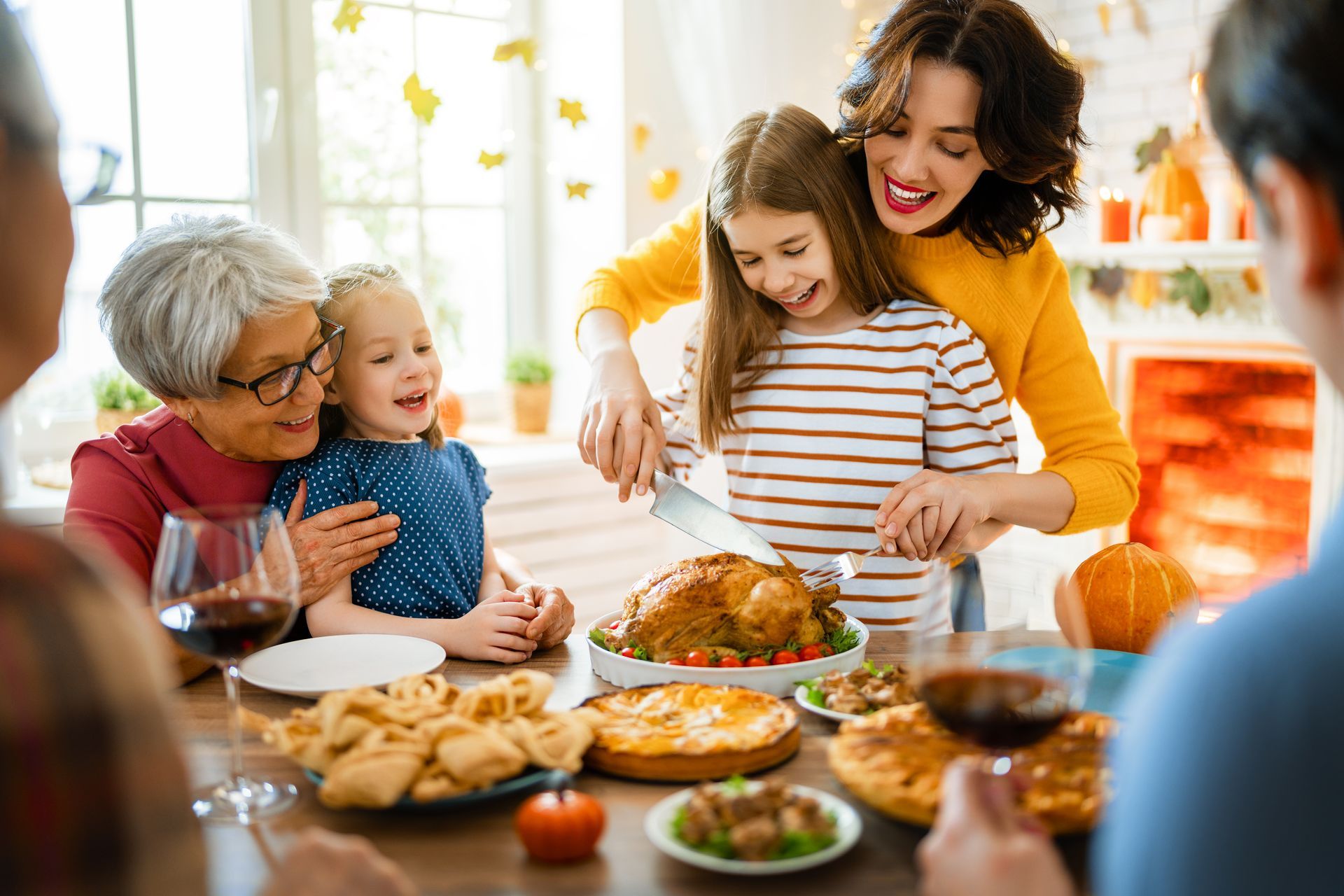
Do you prioritise family mealtime? In today’s fast-paced environment, where everyone often feels pulled in different directions, family meals can be easily dismissed and missed. Family meals can be truly magical; besides nourishing, they pull families into unity and support mental, physical and emotional health. The benefits span across all age groups. In teenagers specifically, a large body of research shows that families who have meals together show:

• Better school performance, with a higher likelihood of achieving A’s, is in school.

• Lower the risk of teenage behaviours such as smoking, substance abuse, eating disorders, teenage pregnancy and violence.

• Lower risk for depression and anxiety, and higher self-esteem

• Lower obesity risk and better cardiovascular health

Family meals can play a vital role in strengthening family bonds, promoting stability, and fostering a sense of unity and connectedness. They also have the potential to enhance the developmental assets of adolescents, including problem-solving skills and social-emotional growth. Additionally, family traditions and routines, such as shared meals, provide a sense of consistency and an opportunity to connect while promoting healthy attitudes and behaviours related to food. 

Family meals are also powerful for adults, as well, with parents having better nutrition, less dieting patterns, more self-esteem and lower risk of depression – I see this happening every day in my practice. 

Eating meals together as a family also has a profoundly positive impact on the child’s and adolescent’s eating habits and diet quality; the more meals eaten together, the greater the impact.


Number of meals together

In today’s world, where schedules are packed and families barely meet, meals together can sound like quite an unrealistic task. Frequent regular family meals are usually defined as 3-7 times a week, keeping the consistency, reflect a sense of connection and priority. So, if you have only one meal a week together, consider how you can adjust your schedule to increase the number of family meals you have routinely. We have at least 16 possible times for families to eat together—seven breakfasts, seven dinners, and two weekend lunches. And let’s not forget snack time or bedtime snacks, which can also be used as a meaningful connection time over a fruit, nuts, and a glass of milk or a cup of yoghurt. 


Making family meals engaging and welcoming

The ideal meal combines nutritious, balanced, and delicious food with fun and conversationbut not always easy to cultivate a welcoming and open environment and dining table. If keeping the conversation with your teen is hard, thefamilydinnerproject.org has some creative tips. Here are some:

• Set an example and keep devices out of the dining table, and avoid getting distractedby them.

• Encourage Sharing. Invite each family member to share highlights from their day or something they’re looking forward to. This sets a tone of openness and encourages everyone to participate. Start the conversation by sharing something about your day and asking for feedback from the children, e.g., how would you suggest Dad deals with his co-worker in that challenging situation? 

• Celebrate Small Wins. Use mealtime to acknowledge achievements, no matter how small. Celebrating these moments can boost a teenager’s self-esteem.

• Cook Together. Involve your teenagers in meal preparation. This not only teaches them valuable life skills but also creates a shared experience that can make the meal more enjoyable.

Play games if talking and sharing at the dining table is not something you are comfortable with yet; games are a great way to break the ice. Here are some examples:

• 20 Questions: One person thinks of an object, person, or place, and the others take turns asking yes-or-no questions to guess what it is within 20 questions.

• Would You Rather?: Pose fun or silly hypothetical questions, like “Would you rather have the ability to fly or be invisible?” Everyone takes turns answering and discussing their choices. 

• Story Building: One person starts a story with a sentence, and each person adds a sentence to continue the story. This can lead to some funny or creative narratives!

• Two Truths and a Lie: Everyone takes turns sharing two true facts and one false factabout themselves—the rest of the family guesses which is the lie.

• Table Trivia: Prepare some trivia questions about family history, fun facts, or themes related to the meal or occasion.

• Guess the Song: Hum or tap a rhythm of a song, and others try to guess what it is. You can even create categories like “Disney songs” or “80s hits.”

• Charades: Act out a word or phrase without speaking, while the others guess what it is. This can be themed according to the season or a holiday.

In Conclusion

The link between family meals and mental health outcomes is clear. By prioritising shared mealtimes, families can not only improve their physical nutrition but also enhance emotional well-being through the connections formed around it. Even if it starts with just a few meals a week, the long-term effects on mental health and family bonds are profound. So, consider making family mealtime a cherished routine—you might be surprised by the positive changes it brings to your family dynamic


One last note – don’t beat yourself up if family meals are not picture-perfect or don’thappen with the “right” consistency.

Knowledge is power, and being aware of the benefits of family meals is important; therefore, this article. However, we also know that “life happens” sometimes, and family mealtime might be put on the backburner during these busy periods. That will not make you and your partner a failure, only human. Just restart building these routines again, step by step – these habits are utterly worth fighting for. 

Claudia Correia

Dietitian and mother of two 

Accredited Dietitian of Singapore


References

Harrison, M. E., Norris, M. L., Obeid, N., Fu, M., Weinstangel, H., & Sampson, M. (2015). Systematic review of the effects of family meal frequency on psychosocial outcomes in youth. Canadian family physician Medecin de famille canadien61(2), e96–e106.

https://thefamilydinnerproject.org/

https://www.raisingteenagers.com.au/power-familymeals/

By Aki Tsukui Director of Wellness - Leadership & Systemic Coach, Transformational Facilitator April 30, 2026
In my recent work, I’ve begun to notice a pattern. Many women across different stages of life are quietly struggling. Not with something obvious, but with something much harder to name. Friendship. On the surface, life looks full. There are social circles, dinners, invitations, people to message on a Friday night. There is connection. And yet, beneath that, there is a quiet, persistent feeling: Something doesn’t feel quite right. The Reality Beneath Connection So many friendships begin through circumstance. We meet people through work, shared environments, mutual communities, or simply being in the same phase of life. And naturally, connection forms. These relationships can be warm, supportive, and genuinely meaningful. They often arrive at a time when we need them most: when life is shifting, when we are finding our footing, when we don’t want to feel alone. But there is something many women don’t say out loud: Some friendships are built on situation, not alignment. And over time, that difference begins to surface, not as conflict, but as a quiet undercurrent. The Discomfort That’s Hard to Explain What I hear from female clients is rarely dramatic. It’s the sense of not being fully themselves. Of subtly managing energy instead of simply being. Of leaving an interaction feeling slightly drained, without knowing why. Nothing is obviously wrong. No one has done anything hurtful. In fact, these friendships often include kind, thoughtful people who have shared important moments with us. Which is exactly why it’s so confusing. Because when nothing is broken, it becomes harder to trust the feeling that something isn’t quite right. When Gratitude Silences Truth Many women carry a deep sense of appreciation for the people in their lives. These friendships may have supported them through transitions, offered belonging, or simply been there when it mattered. So, when discomfort arises, it is often softened: I should be grateful. Maybe I’m overthinking this. But gratitude and misalignment can exist at the same time. You can value what a friendship has given you and still feel that it no longer reflects who you are becoming. The Quiet Cost Because there is no clear reason to question the relationship, the adjustment often happens internally. It looks like small things: holding back certain thoughts, avoiding deeper conversations, feeling slightly “on” instead of at ease. Even a quiet sense of relief when plans fall through. Individually, these moments seem insignificant. But over time, they create distance, not from others, but from yourself. Why We Stay Friendships are rarely just about one person. They are intertwined with shared circles, familiar routines, and a sense of belonging that extends beyond a single connection. Which is why stepping back can feel so much bigger than it seems. There is also the quiet weight of beginning again. Building new connections asks for openness. Letting go, even with care, asks for truth. And so, many women stay, not because it feels right, but because it feels easier than facing what change might require. The Quiet Turning Point And yet, something begins to shift. Not suddenly, but gradually. A quiet awareness surfaces: I don’t think I can keep showing up like this. This isn’t about blame or judgment. It’s about noticing yourself more honestly. Where you feel open, and where you feel restricted. Where connection flows, and where it feels effortful. Redefining Connection The shift doesn’t need to be dramatic. It often begins in small, almost invisible ways. Speaking a little more honestly. Setting a gentle boundary. Choosing where you place your time and energy with greater intention. And slowly, things begin to change. Some friendships deepen because they can meet you there. Some soften into something lighter. Some quietly fall away. A Different Kind of Belonging What many women are truly longing for is not more connection, but more alignment within connection. Not just people to spend time with, but spaces where they can exhale. Where nothing needs to be filtered. Where they can be fully themselves without effort, without adjustment. If this resonates, you are not alone. This is not about being ungrateful or difficult. It is about becoming more attuned to yourself, your energy, and your truth. And often, that awareness begins quietly in the middle of a conversation, after a dinner or even in a feeling you can’t quite explain. The question is not, Are these the right friends? But: Where do I feel most like myself and am I allowing myself to move closer to that? Because true belonging isn’t created by proximity. It’s created in the moments where you no longer feel the need to edit who you are and realise you don’t have to leave parts of yourself behind to be accepted. And if something in you is beginning to notice this quietly, gently, it may be worth giving it space. Not to rush into change, but to listen more closely to yourself and to what more aligned, honest connection might begin to look like in your life.
By Nick Jonsson – Supervised Counselor and Executive Coach April 30, 2026
Friendship sits at the core of a meaningful life - it’s not just a “nice to have,” it’s essential  Over the years, I’ve done a lot of work on myself, and that has naturally changed how I show up in my friendships. In the past, I might have been more focused on what I could get from relationships. Today, it’s very different. Now, it’s about being of service. It’s about being present, listening deeply, and showing up consistently for the people who matter. For me, being a good friend means being there not only in the good times, but especially when someone is struggling. It means putting the phone away, giving full attention, and truly hearing what’s being said - and sometimes what’s not being said. This is something I also bring into my coaching and therapy work. I often ask clients to reflect on their friendships - how healthy they are, where they feel supported, and where things may be broken. Because the truth is, we cannot go through life carrying unresolved friendships. If something is broken, we need to take responsibility, make amends, and do the work to make it right. There’s powerful research from Dr. Robert Waldinger that shows how critical relationships are to our wellbeing. In fact, a lack of meaningful connection has been compared to smoking 14 cigarettes a day. That’s how serious this is. So friendship is not just about connection - it’s about health, longevity, and the quality of our lives. Today, I focus on a small circle of real, authentic relationships. People I can be honest with. People who hold me accountable. People I can support, and who support me in return. At the end of the day, it’s simple - be the friend you wish you had. Show up. Listen. Care. And when something is broken, have the courage to fix it.
By Aki Tsukui (Leadership & Systemic Coach) April 2, 2026
Family is often where love begins. It is our first experience of connection, belonging, and identity. Within the family system, we learn how to give and receive love, how to relate to others, and how to see ourselves in the world. At its best, family can be a place of deep nourishment: a source of strength, safety, and unconditional support. And yet, for many of us, family can also feel complicated. There may be moments of tension that seem disproportionate, patterns that repeat across generations, or emotional burdens that are difficult to explain. We may find ourselves reacting in ways we don’t fully understand, feeling responsible for others in ways that feel heavy, or struggling to step into our own lives freely. This is because family is not just about the people we see. It is also about the invisible threads that connect us across generations. The Hidden Dynamics of Family  Every family system carries a history. Alongside love, there may also be unresolved grief, unspoken pain, losses that were never fully processed, and experiences that were too overwhelming to be integrated at the time. These experiences do not simply disappear. Instead, they often live on within the system, quietly shaping the dynamics of future generations. This can show up as what we call entanglements—where one family member, often unconsciously, carries emotions, roles, or burdens that do not fully belong to them. For example, a child may feel an unexplained sadness that mirrors a grandparent’s unresolved grief. Someone may take on the role of “holding the family together,” even at the expense of their own well-being. Others may struggle with relationships, self-worth, or a sense of belonging, without understanding the deeper roots of these experiences. These patterns are not signs that something is “wrong” with us. Rather, they reflect a deep loyalty to our family system. At an unconscious level, there is often a desire to remain connected, to belong, to honor those who came before us, and to ensure that no one in the system is forgotten. The Flow of Love In family constellation work, there is a concept known as the flow of love. Love, in its natural state, flows from those who came before to those who come after: from parents to children, and from ancestors to descendants. When this flow is unobstructed, it supports a sense of grounding, vitality, and ease. We feel supported by what came before us, while being free to move forward into our own lives. However, when there are disruptions, such as trauma, exclusion, or unresolved events, the flow of love can become blocked or distorted. For example: When a child feels the need to care for a parent emotionally, the natural order is reversed. When a family member is excluded or not acknowledged, others in the system may unconsciously “represent” them. When trauma is not processed, its emotional imprint may be carried by future generations. These disruptions are not caused by a lack of love. In fact, they are often expressions of love: just in forms that have become entangled. Understanding Intergenerational Trauma What we often refer to as “intergenerational trauma” is the transmission of emotional experiences, survival patterns, and coping mechanisms across generations. This can include: Loss and grief that were never fully expressed War, displacement, or migration experiences Family secrets or hidden histories Patterns of abandonment, rejection, or emotional absence Survival strategies that once served a purpose but are no longer needed These experiences can shape how individuals relate to themselves and others, often outside of conscious awareness. It is important to approach this with compassion. Our ancestors did the best they could with the resources they had. Many carried burdens that were too great to process at the time. What we experience today is often a continuation of those unfinished stories, not as a burden to blame, but as an invitation to bring awareness and healing. Family Constellation: Bringing the Invisible to Light Family constellation work offers a powerful way to explore these hidden dynamics. Through this approach, individuals are able to “map” their family system and observe the relationships, patterns, and entanglements that may be present. What is often revealed is not just personal, but systemic showing how individual experiences are connected to a larger family context. Another important principle in this work is that everyone belongs. This includes not only those we know and remember, but also those who may have been forgotten, excluded, or never spoken about—such as miscarried or aborted children, former partners, or family members who experienced difficult fates. Even if their stories were hidden or unknown, they remain part of the family system. When someone is excluded, the system often seeks balance by unconsciously including them through another member. Gently acknowledging and giving each person their rightful place allows the system to settle, restoring a deeper sense of harmony and connection. One of the most profound aspects of this work is that it allows what has been unseen to be acknowledged. When forgotten or excluded members are recognized, when grief is given space, and when each person is seen in their rightful place within the system, something begins to shift. The system moves toward balance. The flow of love is restored, not by changing the past, but by relating to it differently. Returning What Is Not Ours A key part of healing within the family system is learning to gently release what does not belong to us. This does not mean rejecting our family or disconnecting from our roots. Rather, it is about honoring our connection while allowing each person to carry their own experiences. This can look like: Recognizing when we are holding emotions that may not fully be ours Releasing the need to fix or carry others Acknowledging our parents and ancestors as they are, without needing them to be different Taking our place as the next generation, receiving life and moving forward There is a quiet strength in this process. It allows us to remain connected, while also reclaiming our own path. The Possibility of Healing Healing within the family system does not require perfection. It begins with awareness. As we become more conscious of the patterns we carry, we create space for choice. We are no longer moving purely from inherited dynamics: we are able to respond with intention, presence, and clarity. This is where transformation happens. When we restore the natural flow of love, we not only support our own well-being. We also create a shift for future generations. The patterns that once repeated can begin to soften. The burdens that were once carried can be laid down. In this way, healing is both personal and collective. Honoring Where We Come From Family is not always simple. It can be a place of great beauty and deep challenge. It can hold both love and pain, connection and complexity. To truly engage with family is to embrace both aspects: to honor the love that exists, while also acknowledging the parts that are difficult. When we do this with openness and compassion, we create the possibility for something new. We begin to relate to our family not just from habit or conditioning, but from awareness. And from this place, love can flow more freely supporting us as we step into our own lives, while staying rooted in where we come from. There is a quiet wisdom within every family system, always moving toward balance and wholeness. When we are willing to turn toward what has been unseen with openness and respect, healing begins to unfold in its own time and way. As the flow of love is restored, we find ourselves both deeply rooted and gently freed: able to walk forward in life supported by those who came before us, rather than bound by what was left unresolved. For those who feel called to explore this work more deeply, we offer Family Constellation sessions in a variety of formats, including in-person and online, as well as individual and group settings, creating safe and supportive spaces for this gentle yet powerful process of healing and reconnection.