Pride, Identity and Belonging: Finding Space to Be Whole
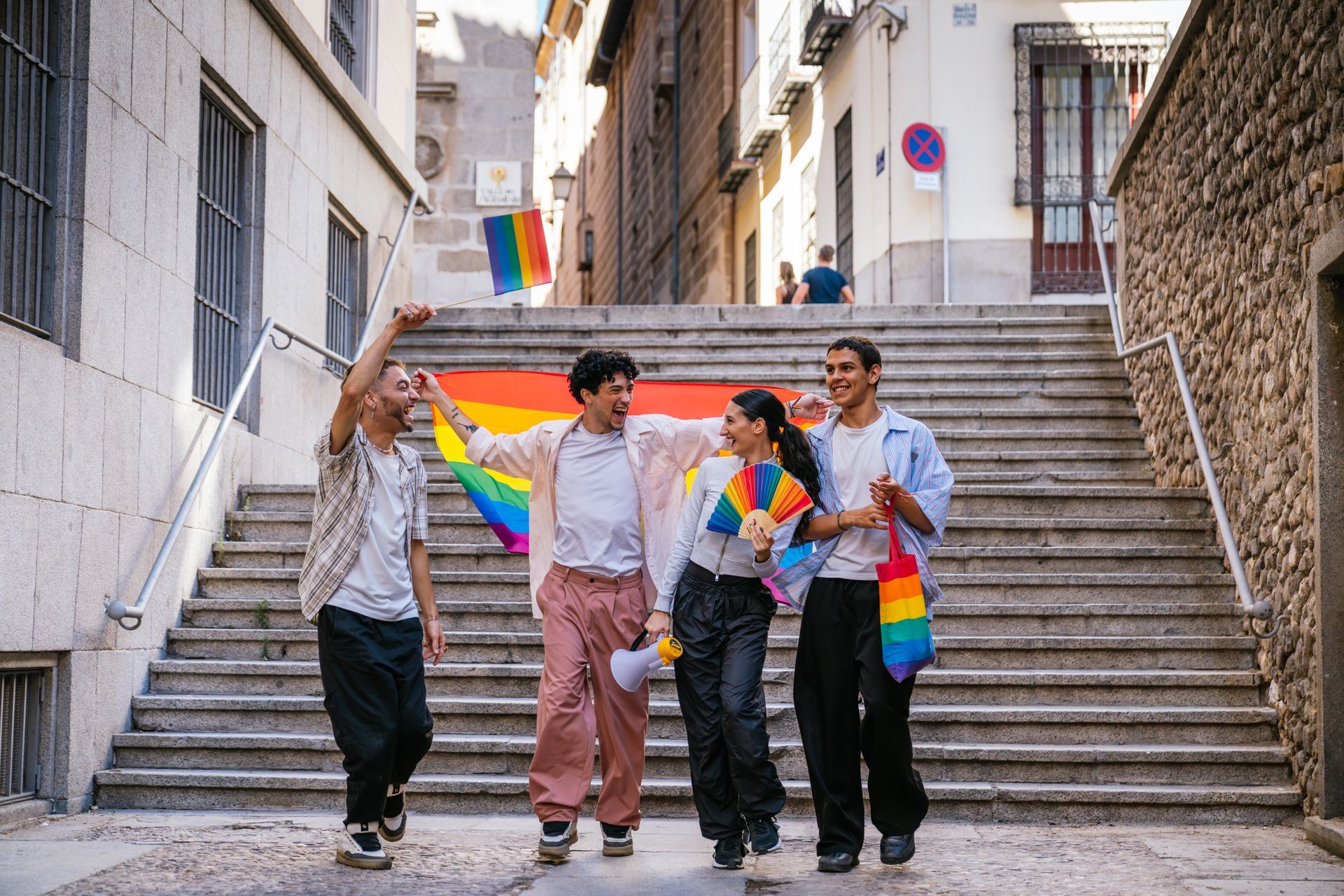
Every year, Pride Month invites us to celebrate LGBTQ+ identities, communities, histories, and the people who came before us. Yet beyond the colours, visibility, and public celebrations, Pride also invites us into a deeper reflection: what does it mean to belong to ourselves? What does it mean to be seen, not only by the world around us, but by the people we love, the communities we live in, and the systems that shape our everyday lives?
From a marriage and family therapy perspective, identity is never formed in isolation. We do not simply wake up one day with a complete understanding of who we are. We become ourselves through relationships. We are shaped by our families, cultures, religions, languages, gender expectations, friendships, migration stories, and the places we learn to call home. For many of us, identity is not one single answer, but rather a collection of many parts of ourselves trying to coexist.
This is especially true in a city like Singapore. Singapore is a place where so many cultures, religions, languages, and ways of being exist side by side. There is something deeply precious about walking through a city where people express themselves through food, dress, language, faith, family traditions, and community rituals in so many different ways. In that diversity, we are reminded that identity is layered. We are not only one thing. We may be queer, Singaporean, foreign-born, religious, spiritual, neurodivergent, multilingual, a parent, a partner, a child, a professional, a caregiver, or all of these at once.
And yet, for LGBTQ+ individuals, couples, and families, the experience of identity can also carry tension. In Singapore, meaningful progress has been made. The repeal of Section 377A marked an important step in the journey toward greater dignity and recognition. At the same time, many LGBTQ+ people continue to live with the reality that not all relationships, families, and identities are fully recognised or protected in the same way. Both truths can exist together: we can honour the progress that has been made, while also acknowledging the battles that are still being fought.
Pride, then, is not only about celebration. It is also about resilience.
It is about the courage to name oneself honestly in a world that may not always make that easy. It is about the quiet strength of a young person trying to understand their gender or sexuality. It is about the couple who builds a life together even when their relationship is not always seen by the law. It is about the parent who chooses love over fear. It is about the friend who listens without judgment. It is about the family member who is still learning, but chooses to remain present. It is about the communities that create spaces where people do not have to shrink themselves to be accepted.
A few weeks ago, I had the chance to attend an anniversary event at Proud Spaces, a community space in Singapore that brings together LGBTQ+ people, allies, and organisations. What stayed with me was not only the event itself, but the feeling of being in a room where people were actively building belonging. These spaces do not appear by accident. They are created by people who give their time, energy, care, advocacy, and often their own lived experience so that others may feel less alone.
Spaces like these matter because tolerance is not the same as belonging. To be tolerated is to be allowed to exist. To belong is to feel that your existence has a place. It is to walk into a room and feel that you do not need to hide the parts of yourself that make others uncomfortable. It is to be able to speak, dress, love, move, pray, parent, and live with a sense of dignity.
In therapy, we often see how painful it can be when parts of a person’s identity have been silenced for too long. Shame does not only live inside individuals; it is often created and sustained in relationships and systems. When someone repeatedly receives the message that a part of them is too much, too different, too inconvenient, or too difficult to understand, they may begin to disconnect from themselves. Healing often begins when that person is met differently: with curiosity, validation, safety, and respect.
This is why Pride Month is relevant to all of us, whether we identify as LGBTQ+ or not. Pride asks us to reflect on the spaces we create. Are we making room for people to be honest about who they are? Are we listening when someone tells us their name, their pronouns, their story, their family structure, their faith, their culture, or their fears? Are we allowing the people around us to be complex, or are we asking them to fit into categories that feel more comfortable for us?
It also asks us to turn inward. Which parts of ourselves have we learned to hide? Which parts have we been taught to minimise? Where do we feel most whole? Who are the people, communities, and spaces that allow us to breathe more freely?
For some, Pride may be loud and visible. For others, it may be private and quiet. It may look like attending a community event, wearing something that feels true, holding a partner’s hand, coming out to one trusted person, reconnecting with chosen family, or simply looking at oneself with a little less shame than before.
We stand on the shoulders of those who fought before us, and we continue that work in the way we show up for one another today. In Singapore, more and more spaces are being created for people to feel validated in their identities, relationships, cultures, beliefs, and ways of being. These spaces matter because belonging is not built only through laws or public recognition, but also through the everyday experience of being met with care, curiosity, and respect.
At Counseling Perspective, we have worked hard to reflect this same spirit within our own team. Our counsellors bring together a multitude of backgrounds, cultures, beliefs, origins, and specialisations, allowing us to support people whose stories, identities, and needs may look very different from one another. Whatever your story, it has a place with us. If you are exploring your identity, struggling with your sense of belonging, or simply needing a space where you can feel more fully seen, our team is here to walk alongside you and help you find the emotional support that feels right for you.
Resources in Singapore
For those looking for LGBTQ+ affirming community spaces, support, or further information, the following organisations may be helpful:
· Proud Spaces — A community space for LGBTQ+ people, allies, and organisations in Singapore, focused on connection, collaboration, and belonging. Visit website
· Oogachaga — An LGBTQ+ affirming community-based organisation offering counselling, emotional support, and professional resources. Visit website
· Oogachaga WhatsApp Counselling — A free and confidential WhatsApp counselling service for LGBTQ+ people in Singapore. Visit website
· The T Project — Singapore’s first and only social service for the transgender community, including shelter and community support. Visit website
Sayoni — A Singapore-based feminist organisation advocating for queer women, including lesbian, bisexual, transgender, and queer women.